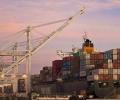
Exporters are readying back-up routes to send their shipments to the nations belonging to the Commonwealth of Independent States (CIS), including Russia, as the war in Ukraine continues to intensify. Three routes are being explored. The first is the China route using Qingdao port. The second is the International North-South Transport Corridor (INSTC) route that connects Mumbai to Moscow via Iran and Azerbaijan.
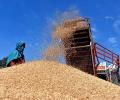
A decision to tap the 30 countries for exporting wheat was taken at a meeting of the commerce ministry on Thursday.

The Russia-Ukraine crisis, along with general bullishness in agricultural commodities, has ensured that after a fairly long time, most of the 24 commodities for which the Centre declares the minimum support price (MSP) are trading above it. The exceptions here are chana or gram and a few varieties of pulses. This might gladden the farmers, especially those who are still holding on to their stocks from the previous kharif harvest or are harvesting the latest rabi crop. But this could stoke retail and wholesale inflation.
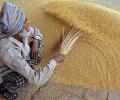
India's opening stocks of wheat in the central pool are expected to be 19.5-20 million tonnes as on April 1, 2022, the lowest in the last three years, but much higher than the normative level required for maintaining a buffer and strategic reserve, trade and market sources said. In accordance with the buffer and strategic reserve norms, India should have a wheat stock of 7.5 million tonnes in the central pool as on April 1 each year and this year's stocks, though the lowest in the last three years, will still be over 160 per cent more than what is required. On the export front, both government and trade sources are unanimous that this year (FY22) they will be 7-7.25 million tonnes, a record, while in the next financial year, they might touch even 10 million tonnes if the current momentum is maintained.

India is looking to develop alternative export markets for tea such as Iraq, Saudi Arabia, the US, Japan and Tunisia in view of the Russian invasion of Ukraine, people aware of the matter said. Meetings are being held with buyers in some of these countries in virtual mode, with the help of diplomatic missions located there. Similar meetings for the remaining countries have also been planned.

India's wheat exports could touch a new record of 10 million tonnes in 2022-23, up from a record seven million tonnes in the current financial year, if global market conditions remain choppy and no curbs are imposed on outbound shipments. That is the bullish estimate by officials from global trading firms and market watchers who say the Russia-Ukraine crisis has not only attracted global buyers to India but also pushed the price of Indian wheat from around $320 per tonne (FOB) to over $360 per tonne in less than 10 days. Food secretary Sudhanshu Pandey told reporters that wheat exports till February-end have already reached 6.6 million tonnes and by the end of March, outbound shipments will reach seven million tonnes.

India's exports are unlikely to get an immediate boost from a depreciating rupee, which touched an all-time low on Monday, driven by rising commodity prices. The rupee fell to 76.97 against the dollar earlier in the day, settling 1.05 per cent weaker than the previous close. Oil prices soared to their highest since 2008 on Monday at $139 per barrel, after the US and European allies explored a Russian oil import ban, while delays in the potential return of Iranian crude oil to global markets increased supply fears.

The apparel and engineering sectors have already witnessed the trend in the past one week. If this continues, it can have an impact on the overall export demand in the coming months, considering that Europe is the largest national export market for India.
India is looking to tap its diplomatic missions abroad to enable grain exporters in the country to ship out wheat and corn as supplies from Russia and Ukraine are expected to remain disrupted for some time to come. Between the two items, pushing for wheat is easier because of a huge domestic surplus. "We are hand holding our exporters and support from various Indian missions abroad is also being channelised accordingly," a senior government official said. Global wheat prices have jumped since the Ukraine crisis started, with wheat futures in the US reaching their highest levels since 2008.

In the three months leading up to the Assembly elections, Chief Minister Yogi Adityanath's government distributed over 1.4 million tonnes (MT) of wheat, 0.95 MT of rice, 0.10 MT of chana (gram), 101.9 million litres of soybean oil and 100,000 tonnes of salt as free ration. This was part of the Covid relief package, officials said.

The government may soon give the green light to bilateral trade between Russia and India in their national currencies to avoid any trade disruptions, multiple people aware of the matter said. While the Department of Commerce has recommended the proposal, an announcement is likely to be made by the finance ministry after further deliberations between the Department of Economic Affairs and Department of Financial Services. "The finance ministry will take a call on how to peg the two currencies," a senior government official told Business Standard. In the past, the two nations have had rupee-rouble trade, and when such an arrangement is implemented again, it will bypass the sanctions imposed on Russia by the West.

Nearly five months after its soft launch, the government's e-portal, the National Single Window System (NSWS), is seeing a significant increase in the number of investors using it to get a bunch of approvals for their ventures. The first clearance was granted on 18 January. Since then, the progress has been good. Out of the 1,258 registered users on the portal, 378 were registered in the last one week.

Though early days, meteorologists point towards a neutral La Nina during the initial phase of the four-month monsoon season this year that starts from June. If this holds true, by the time the rains hit the mainland, it could mean there would be one less reason to worry about the prospects of the monsoon this year. Weathermen said making any accurate prediction of how El Nino will behave and what impact it can have on the progress and distribution of rains is difficult to say at this point. A clear picture will emerge around late May or early June.

The Centre has, perhaps for the first time, decided to provide funding support to farmer-producer organisations, krishi vigyan kendras, custom hiring centres, and individuals for purchasing them.

India has agreed to allow import of pork and pork products from the US as a part of a bilateral trade deal which will facilitate export of Indian mangoes and pomegranate to the US. The development comes months after the two governments renewed the India US Trade Policy Forum (TPF), after which both nations agreed to iron out thorny issues that included market access issues pertaining to the agriculture sector.

The Department for Promotion of Industry and Internal Trade (DPIIT) will soon start public consultation for a national retail trade policy, which is likely to include an insurance scheme aimed at providing financial protection against losses caused by theft, accidents or natural calamities. The policy will also spell out ways to give traders access to low-cost finance, promote digital inclusion, and create necessary infrastructure to support them, a senior government official told Business Standard. This is expected to offer relief especially to traditional traders, who are facing stiff competition from large e-commerce players.
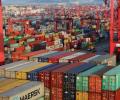
Uncertainty looms over India's export outlook, with the new Covid-19 variant Omicron spreading rapidly across the country's key shipment destinations. With the US and parts of Europe witnessing more than 100,000 Covid-19 cases a day, exporters expect some disruption. However, there may not be an immediate decline in exports from India because the order books remain strong at least for the next few weeks, they said.

The government is working towards further review and simplification of the foreign direct investment (FDI) policy to facilitate the proposed initial public offering (IPO) of the Life Insurance Corporation (LIC), Department for Promotion of Industry and Internal Trade (DPIIT) secretary Anurag Jain said on Thursday. The final decision will be taken by the Cabinet. The industry department is working together with the finance ministry's department of financial services (DFS) and department of investment and public asset management (DIPAM) towards a successful listing of the life insurer on the domestic bourses, which is expected to be the largest in India.

The government's food subsidy in the ongoing fiscal year is expected to be a little less than Rs 4 trillion.
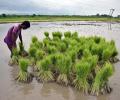
Among the key demands of agitating farmers has been a legal guarantee on minimum support price (MSP). The protest reached a crescendo when thousands of farmers from Punjab and elsewhere marched towards Delhi late last year and decided to block the main entry points once they were denied entry. The Centre, on its part, held 11 rounds of discussions with the protesters and even offered to amend some of the provisions without much success. With now one of their chief demands met, farmers have now moved on to force the government to concede on MSP.
 © 2026 Rediff.com - Investor Information - Advertise with us - Disclaimer - Privacy Policy - Sitemap - Feedback - About us - Terms of use - Grievances